

The 15-Minute Kettlebell Protocol That Made an Hour of Jogging Look Lazy
August 10, 2026
Quick Summary: One 35-pound kettlebell, fifteen minutes, three times a week. This swing-based protocol drives your heart rate into sprint territory while building the glutes, hamstrings, and back that desk life destroyed. Full workout included, plus the two form cues that separate a great swing from a sore lower back.
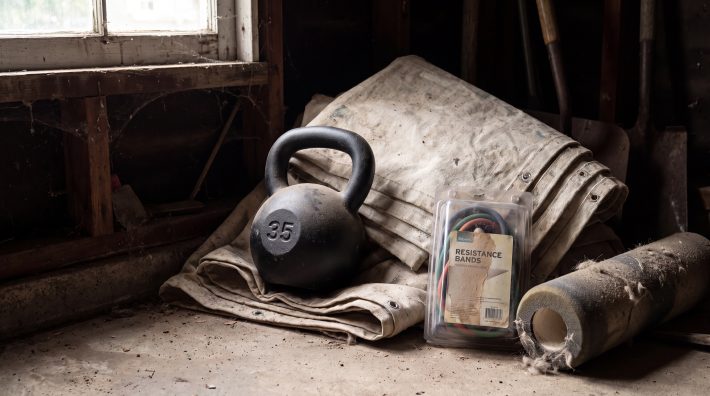
The kettlebell sat in Rachel’s garage for two years wearing a thin coat of dust and holding down a stack of paint tarps.
She’d bought it during a brief and expensive enthusiasm phase — same order as the resistance bands still in the packaging and a foam roller she’d used exactly once. It was 35 pounds, matte black, and mildly accusatory every time she pulled the car in.
What got her to finally pick it up wasn’t discipline. It was a scheduling collapse. Her running route flooded out in March, the gym raised prices, and she had a fifteen-minute gap between a work call and dinner. She googled “kettlebell workout short,” watched a two-minute video, and swung the thing badly for eleven minutes.
She could not walk normally on Thursday.
Six weeks later she was doing the protocol below three times a week and her resting heart rate had dropped by seven beats per minute — a change her running had taken most of a year to produce.
Here’s what she was doing and why it hit so hard.
Why Swings Punch So Far Above Their Weight
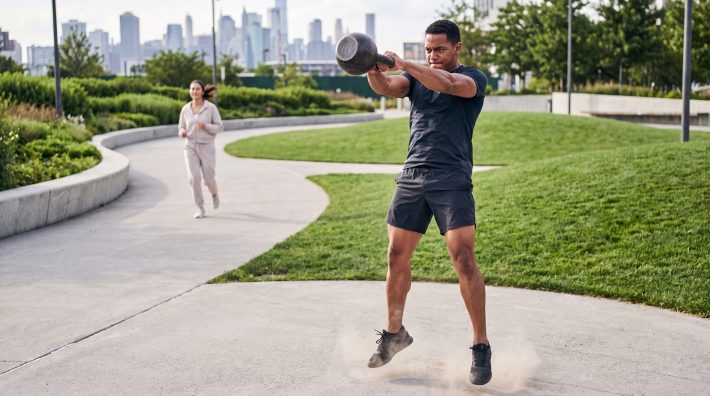
A kettlebell swing is a hip hinge, not a squat. Your hips snap forward explosively, your glutes and hamstrings fire hard, and the bell floats up on momentum. Your arms are ropes. They’re not lifting anything.
That combination does something unusual. You get a heavy strength stimulus on the biggest muscles in your body and a cardio stimulus at the same time, because explosive full-body movement drives your heart rate through the roof within about forty seconds.
Steady jogging gives you cardio. Machine circuits give you strength. Swings give you a large slice of both in a fraction of the time, which is why they’ve become a staple in tactical training programs where nobody has an hour to spare.
Fifteen minutes of swing intervals is not comparable to fifteen minutes of jogging. It’s closer to a hill sprint session, and the muscle-building side is something jogging simply doesn’t offer.
The Protocol
Equipment: One kettlebell. Women typically start at 18–26 lb, men at 26–35 lb. Too light is a much bigger problem than most people expect — the swing needs load to work properly.
Warm-up (3 minutes): - 20 bodyweight hip hinges (hands on hips, push hips back, feel the hamstrings) - 15 glute bridges - 10 bodyweight squats - 20 arm swings
The main set (10 minutes):
Every minute on the minute, for ten minutes: - Swings for 20 seconds (roughly 10–12 reps) - Rest for the remainder of the minute
That’s it. Ten rounds. As you get fitter, extend to 25 or 30 seconds of work per minute.
Minutes one through four feel easy. Minute six is where the protocol introduces itself. Minute nine is where you find out things about yourself.
Finisher (2 minutes): - Farmer carry with the bell, 40 seconds per side - 30 seconds of standing forward fold
The Two Cues That Save Your Back
Almost every bad swing is one of two errors.
Error one: squatting instead of hinging. If your knees are traveling forward and your hips are dropping straight down, you’re squatting the bell and your lower back is doing work your glutes should be doing.
The fix: Stand two feet from a wall, facing away. Push your hips back until your butt taps the wall without bending your knees much. That backward push is the swing. Feel it in your hamstrings, not your quads.
Error two: lifting with the arms. If your shoulders are burning, you’re muscling the bell up.
The fix: Think “hips snap, arms follow.” At the top, squeeze your glutes hard like you’re pinching a coin, and stand fully upright. The bell floats. It doesn’t get raised.
And a third, because it comes up constantly: the bell only needs to reach chest height. Overhead swings are a different exercise with a different learning curve. Chest height, hard glute squeeze, done.
Where the Fat Loss Actually Comes From
Let’s be honest about the mechanism, because the internet loves to lie about this.
Fifteen minutes of swings burns a solid but not enormous number of calories in the moment. The real value is longer-term and comes in three parts:
One: You built muscle in your glutes, hamstrings, and back. More muscle means a slightly higher baseline energy burn every day, permanently.
Two: High-intensity work elevates your metabolic rate for hours afterward. Modest, but real, and it stacks across sessions.
Three, and this is the big one: You’ll actually do fifteen minutes. Consistently. For months. An hour of jogging that happens twice a month loses to fifteen minutes that happens 130 times a year, and it isn’t remotely close.
The best fat-loss workout is the one that survives contact with a busy Tuesday.
Who Should Skip This
Genuine lower back injuries, herniated discs, or recent surgeries — talk to a physical therapist first. The hinge pattern is usually part of the rehab rather than the enemy, but the loaded explosive version needs a green light from someone who knows your specific situation.
Everyone else: learn the hinge, start lighter than your ego wants, and add weight in a month.
Rachel still has the paint tarps. They’re on the floor now, which she says is where they always should have been.
Stat callout, straight up: Ten rounds of 20-second swings is 200 seconds of actual work. That’s three minutes and twenty seconds of effort inside a fifteen-minute block — and it will spike your heart rate higher than most people reach in a 40-minute jog. Go find the bell. Check the garage.